Over the past year, asset owners have increasingly shifted their focus from transition risk to climate adaptation, with the key challenge being how to translate physical risk awareness into concrete portfolio decisions. A macroeconomic approach to climate adaptation supports this effort by capturing how physical shocks propagate through economic channels into corporate earnings, valuations, and ultimately portfolio performance. This perspective complements bottom-up approaches, offering a scalable framework that helps provide a broader view of portfolio resilience while working alongside more granular analyses. In this context, Scientific Portfolio (an EDHEC Venture) supports asset owners in building indices that achieve climate resilience through a top-down approach that is robust, flexible, and immediately implementable.
“The world economy is committed to an income reduction of 19% within the next 26 years relative to a baseline without climate impacts”
(Kotz et al., 2024)
Corporates hold $500 trillion in physical assets, with only 1/3 insured against climate physical risks; adaptation is a critical issue to investors.
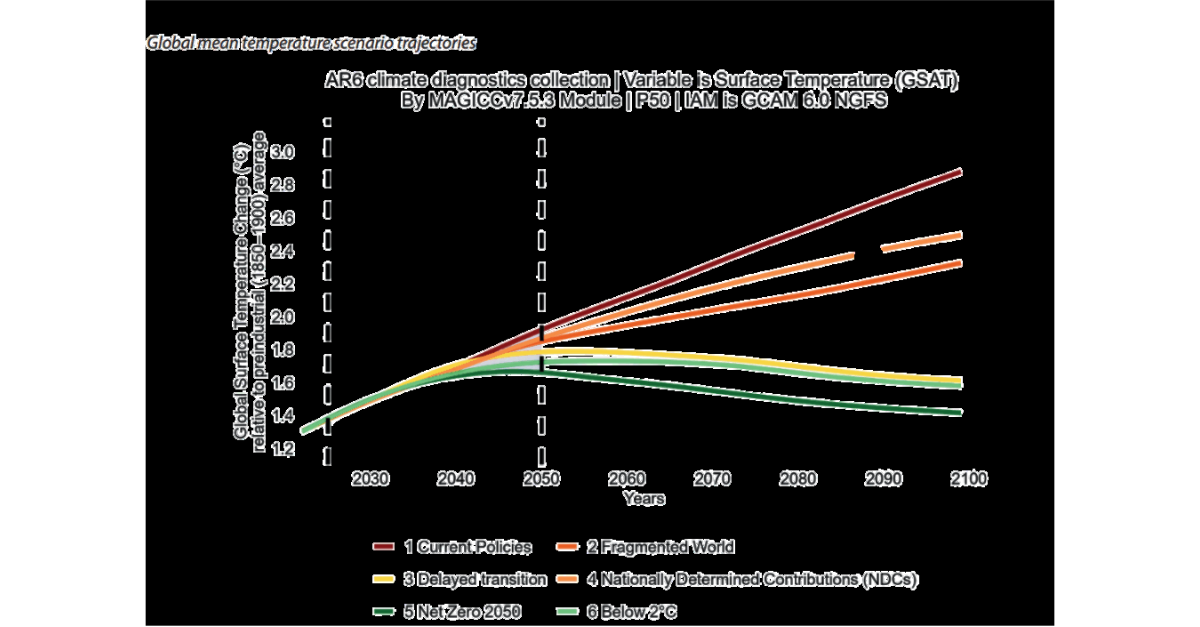
From forward-looking temperature pathways…
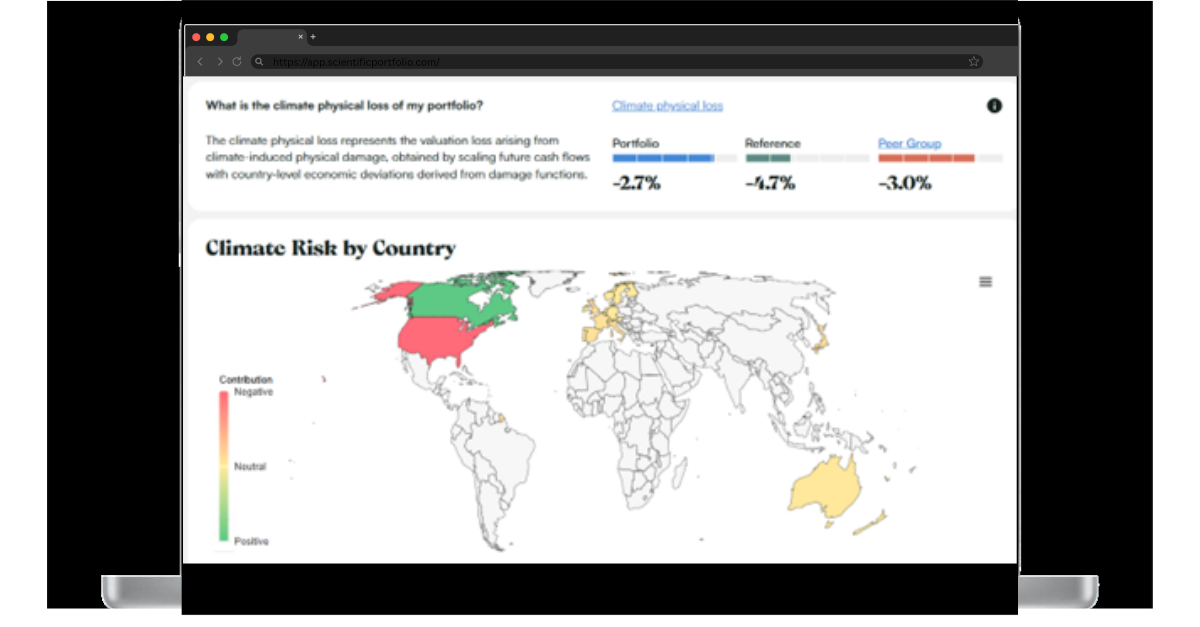
… to portfolio losses linked to physical climate risks
Challenges We Help You Solve
The Economic Implications of Climate Risks are Heterogeneous …
Physical impacts differ materially across geography, time horizon, types of physical risk (acute or chronic), and climate scenarios.
…..
The Data Requirements of Physical Risk Modelling are Intractable
Measuring Climate Physical Risk requires very large amounts of data which are expensive to acquire, expensive to verify, and expensive to integrate.
..
Macroeconomic Approaches to Physical Risk are Difficult to Apply to Equity Investing
Downscaling the Economic Impact of Climate Physical Risk to the Corporate Level is a puzzle yet to solve.
…
The Various Dimensions of Climate Risks can be Difficult to Reconcile
Transition Risks and Physical Risks correspond to different dynamics and can be difficult to reconcile in a consistent risk framework.
..
…
Ready to Take the Next Step?
USE CASE IN CLIMATE RESILIENT INDEXING — Build climate resilient index based on a robust top-down adaptation methodology. Taking real-world financial constraints into account. Validating the resulting strategy and comparing to peers using on-demand analytics.
Getting Started With the Scientific Portfolio Platform
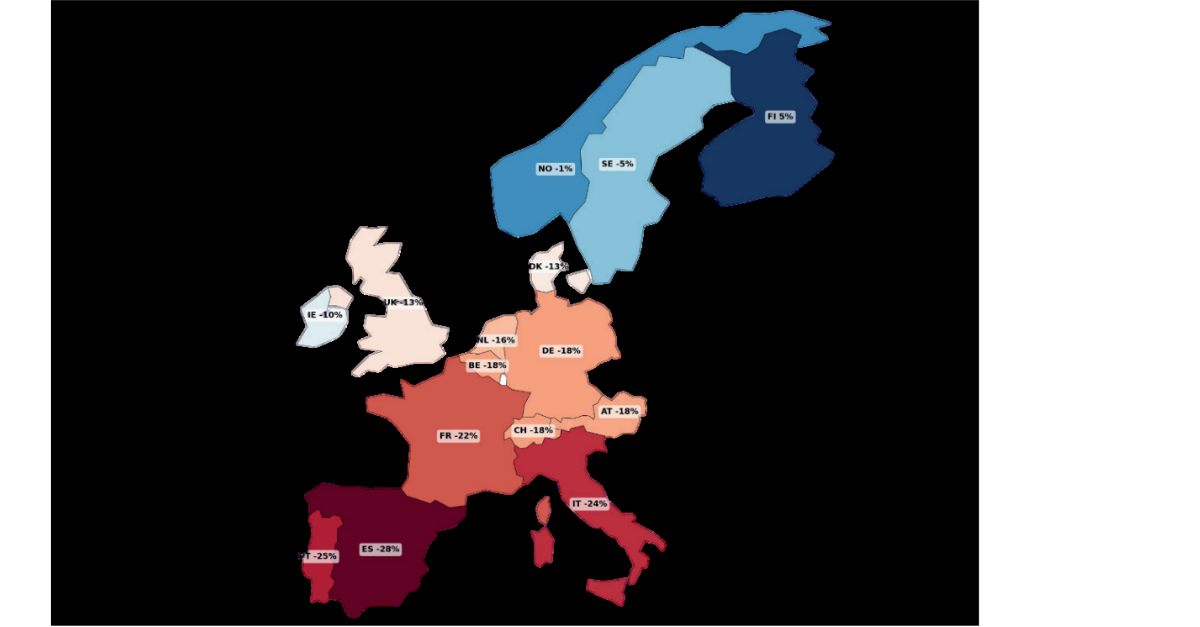
How Sensitive is a Country’s Economy to Temperature Anomalies?
Estimating sensitivities based on 1) NGFS projections of climate risk damages (chronic and acute) on Country GDPs, and 2) on IPCC emission pathways translated into temperature anomalies.
What is the Impact of Country Exposure at Firm Level?
Using a Discounted Cashflow Model to propagate country-level economic damages to corporates. ..
Which Temperature Scenarios?
Our research demonstrates that such sensitivities to temperature anomalies are scenario-invariant, time-invariant, and provider-independent.
Physical Climate Risk in the European Equity Market: Quantifying Country – Sector Heterogeneity
Compare Your Investments Through Our Analytics’ Lens
FINANCIAL ANALYTICS
Measure the Economic Impact of Climate Physical Risks.
Climate physical loss represents the potential decline in a portfolio’s market value arising from the direct and indirect impacts of climate-related physical hazards, such as heatwaves, floods, storms, or chronic temperature changes. It reflects how future economic activity – and therefore corporate cash flows – may be adversely affected as climate change disrupts production, damages infrastructure, and alters long-term growth trajectories.
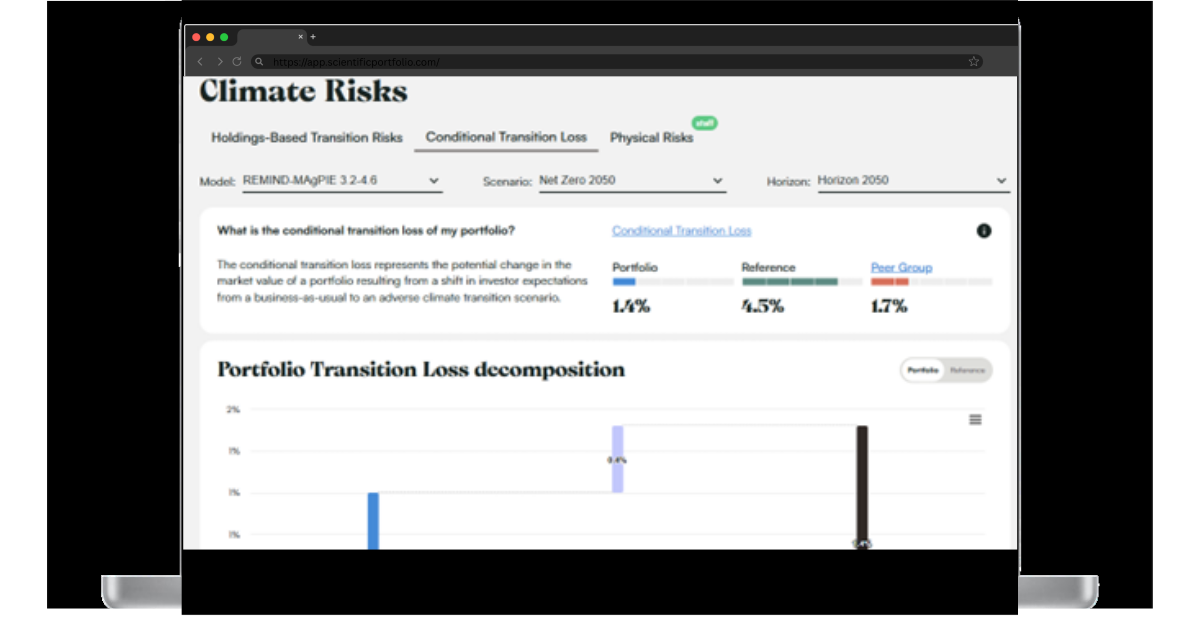
Conditional transition loss represents the potential change in a portfolio’s market value under adverse climate transition scenarios. It reflects how investors might reassess stock valuations if expectations around climate policy, technological progress, or consumer preferences shift abruptly. This portfolio-level metric is constructed from the bottom up, by aggregating the conditional transition losses of all companies held in the portfolio.
Bring Clarity to Climate Exposure, Risk, and Alignment
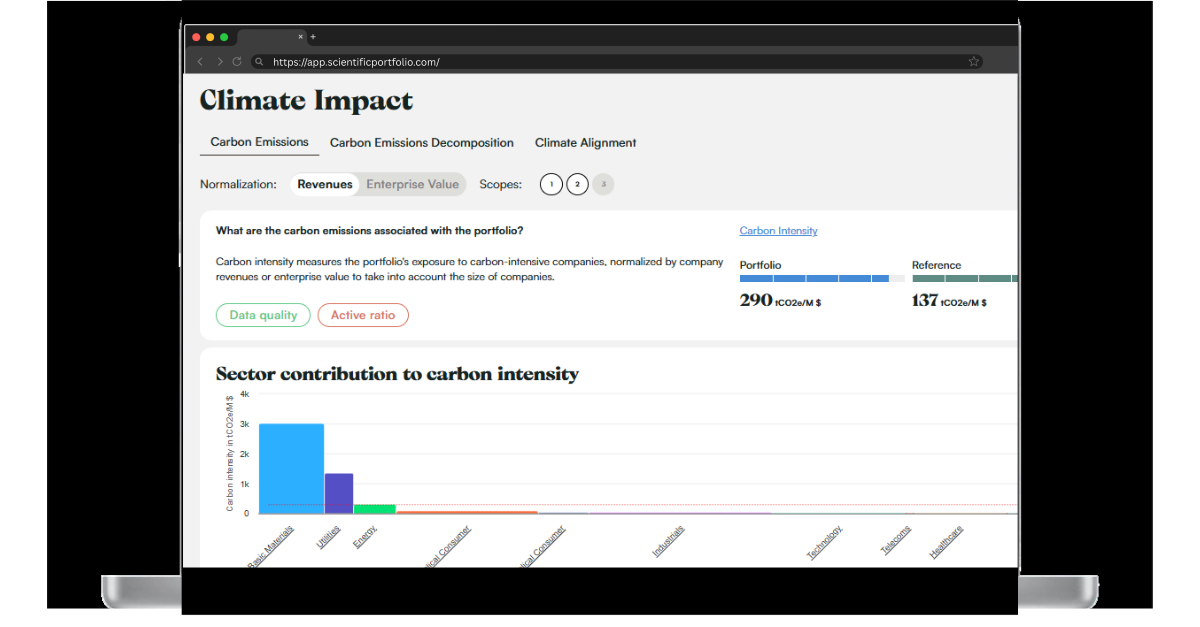
By knowing your exposure to the transition risk factor and your allocation to brown stocks: two complementary measures of climate risk. Quantify potential losses attributable to the climate transition through scenario analysis, and measure the carbon emissions your portfolio is accountable for while attributing the differences relative to its benchmark. Assess the alignment of your portfolio with climate objectives through scenario analysis that considers emissions trajectories and green revenues.
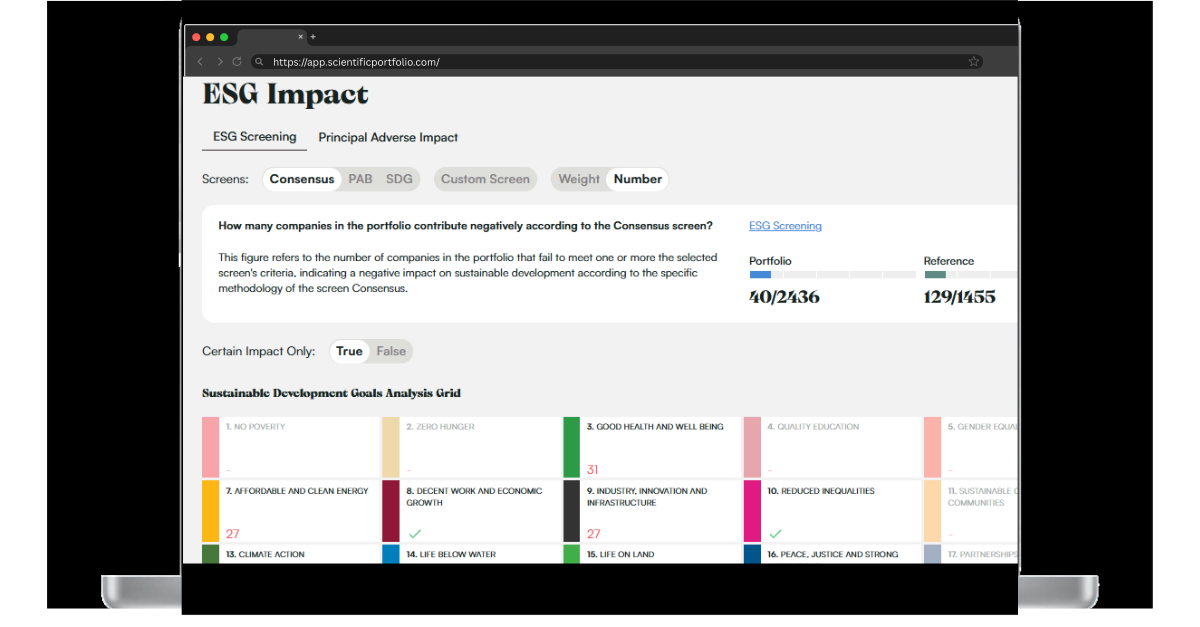
Assess sustainability through ESG screening templates that cover different levels of requirement. Customize ESG screening according to your investment policy, and measure the ex-post impact of excluding securities across risk management, performance, and climate dimensions. Minimize risk deviations attributable to ESG screening while maintaining the integrity of your investment approach.