Talk to SciX
Contact SciX to discuss climate indices, index requirements or disciplined customization.



Volatility and Backwardation Signal Supply Shocks
The Middle East conflict has upended oil markets. WTI futures shifted into deep backwardation between February and April 2026 – near-term prices now exceed long-dated contracts, a classic sign of scarcity. The market expects disruptions to ease by 2027, with December 2026 contracts trading $20 below front-month prices.
This isn’t just about prices. Implied volatility has exploded: The 30-day annualized volatility index (OVX) hit 120% in early March (vs. ~40% pre-war), meaning traders now price in daily oil swings of ±7.5% – up from ±2.5%. For equity investors, the question is urgent: How exposed is my portfolio?
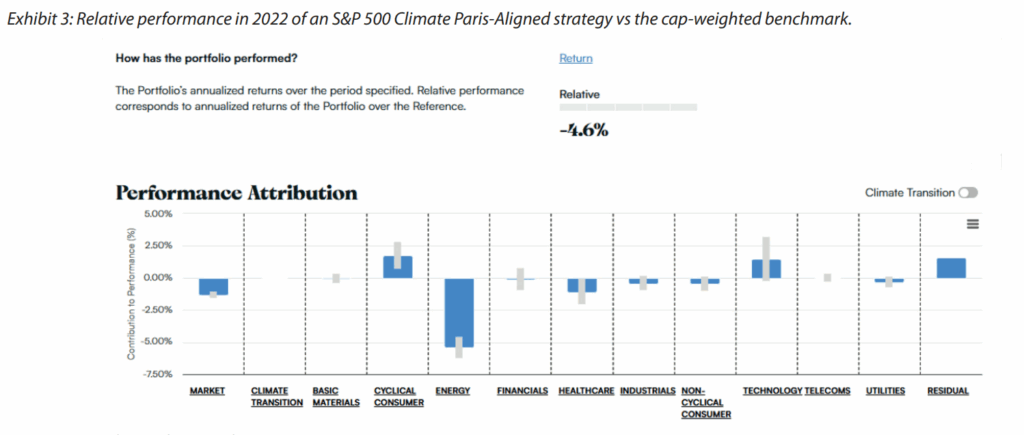
The parallels to 2022 are stark. When Russia invaded Ukraine, crude spiked to $120, and Paris-Aligned Benchmarks (PABs) underperformed by 4.6% due to their structural underweight to Energy. Today, climate investors are right to ask: Will history repeat?
The Hidden Risks in Your Portfolio
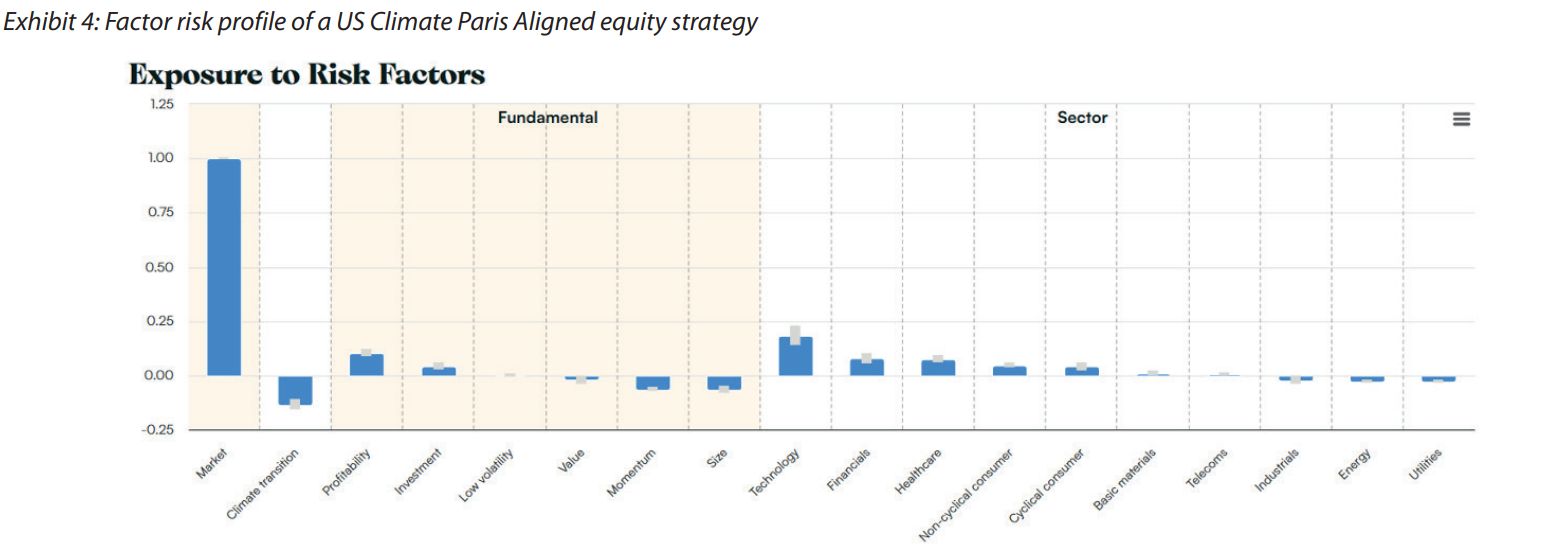
Oil shocks don’t just hit Energy stocks. Portfolios’ factor risk profiles can create indirect oil sensitivity. The catch? These relationships are unstable. A comparison of the 2022 oil shock (Feb-Sep) and today’s (Feb-Apr 2026) shows only Telecoms (besides Energy) behaved consistently in both periods.
So how do you stress-test for the next shock? Scientific Portfolio’s out-of-sample conditional simulations offer a solution. By replicating a portfolio’s factor exposures back to the 1970s, we estimate how it would have performed in past oil crises—without requiring historical portfolio data from those periods. For example, a Healthcare ETF’s current factor exposures would have underperformed by -4.76% annualized in high-oil regimes, but outperformed by +4.57% in low-oil regimes. The statistical significance? >99% for both scenarios.
Why this matters: You can now model oil shocks without manually picking historical periods or stressing factors in isolation.
Climate Alignment Doesn’t Mean Staying Away from Energy
The 2022 lesson was clear: Excluding Energy hurt PABs. But today’s investors know climate alignment isn’t just about reporting a low-carbon footprint—it’s about driving real-world decarbonization. Here’s why selective Energy exposure makes sense:
Bottom Line
Oil volatility is back, and climate portfolios can’t afford to ignore it. Stress-test your exposures, reconsider Energy exclusions, and target the Ambition-Credibility Gap, because real impact requires more than just a low-carbon label.

"*" indicates required fields